On 3 August 2026, The Associated Press reported that Texas Gov. Greg Abbott had directed the Public Utility Commission of Texas and the Electric Reliability Council of Texas to halt approval of data centers until those agencies could audit projects seeking connection to the state grid. AP, distributing a Texas Tribune report, described a governor’s letter and a same-day pause of ERCOT’s Batch Zero review. It did not describe a new statute.
This is later coverage of that early-August wave, written Thursday 27 August 2026. The operating problem for Florida counties, municipal utilities, constitutional officers, and the enterprises that will ask them for siting is not a new chatbot. It is unmanaged load, water, tax abatements, and ratepayer cost showing up on the public bill.
Texas hit pause. The bill still lands locally.
Texas Issued a Directive, Not a Statute
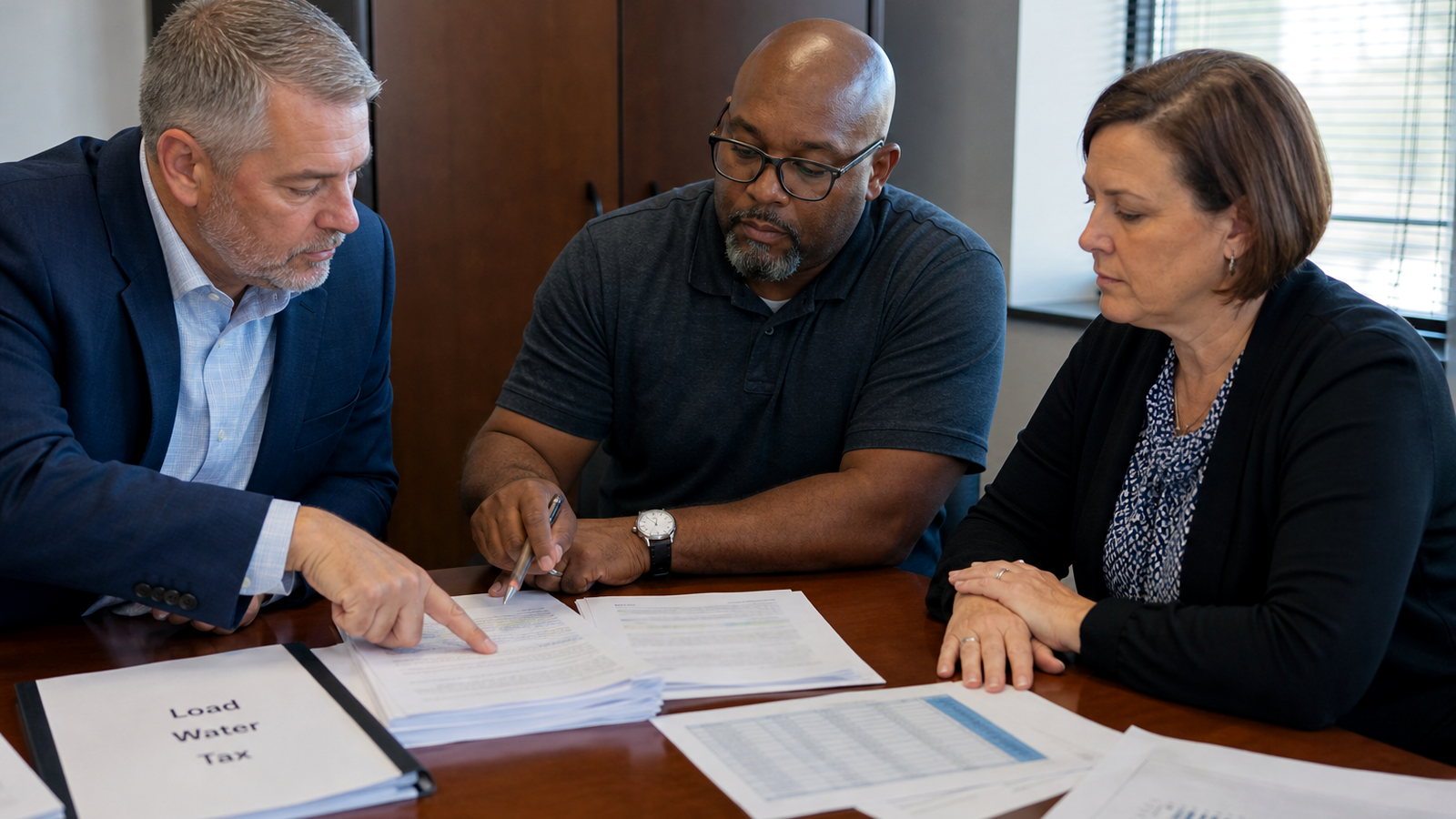
Abbott’s letter, as AP reported it, told PUCT and ERCOT to verify tax breaks, power use and generation, water use and cooling, efforts to reduce local impacts, and ownership. Projects that fail that “comprehensive verification and audit,” Abbott said, must be denied connection to the Texas grid. “Simply put, Texans must come first.”
That is a directive to regulators, not a law and not a dated freeze. AP said it is unclear how long the audit will take, and recorded critics, including Texas Agriculture Commissioner Sid Miller, arguing the letter is not a substitute for legislation and comes up short of a true moratorium.
ERCOT, AP reported, said the same day it would postpone the Batch Zero transmission planning study already underway. A pause of that study is a real operating event. It is still a pause of a queue process, not a ban on every hall, every on-site generator, or every part of Texas outside ERCOT. Some developers, AP noted, are building on-site generation that bypasses a traditional interconnect.
On 18 August, Reuters placed the Texas pause in a global recap of authorities restricting data centres amid the AI boom. Reuters described Abbott’s action as a pause on approvals through the state’s grid interconnection process, with more information required on power, water, tax incentives, ownership, and local impacts, and listed similar freezes, including New York’s one-year halt on facilities using 50 megawatts or more.
Governments are treating compute as an infrastructure choice that arrives as power, water, land, and a bill.
The Queue Numbers Are AP’s and Abbott’s
AP, citing ERCOT, reported more than 1,800 projects in the interconnection queue, representing over 474 gigawatts, more than five times the grid’s record peak demand. Approximately 90 percent of the new power requests are data centers, Abbott said.
Those figures belong to AP, ERCOT, and Abbott. They are not a Buildtelligence census, and they are not Florida numbers. A queue is not built load. Projects sit, drop out, get restudied, or get built with their own generation.
The part that travels is transparency. Abbott cited a PUCT survey, developed with the Texas Water Development Board, on water, cooling, electricity, and whether a facility is on the grid or has its own generation. Of 377 companies PUCT staff said it notified, 28 responded. Rep. Brad Buckley called that participation “pretty pathetic,” AP reported.
If a top market cannot get that survey filled in, a Florida county should not assume the packet in front of it is complete.
Florida’s Large-Load Law Does Not Cover Municipal Utilities
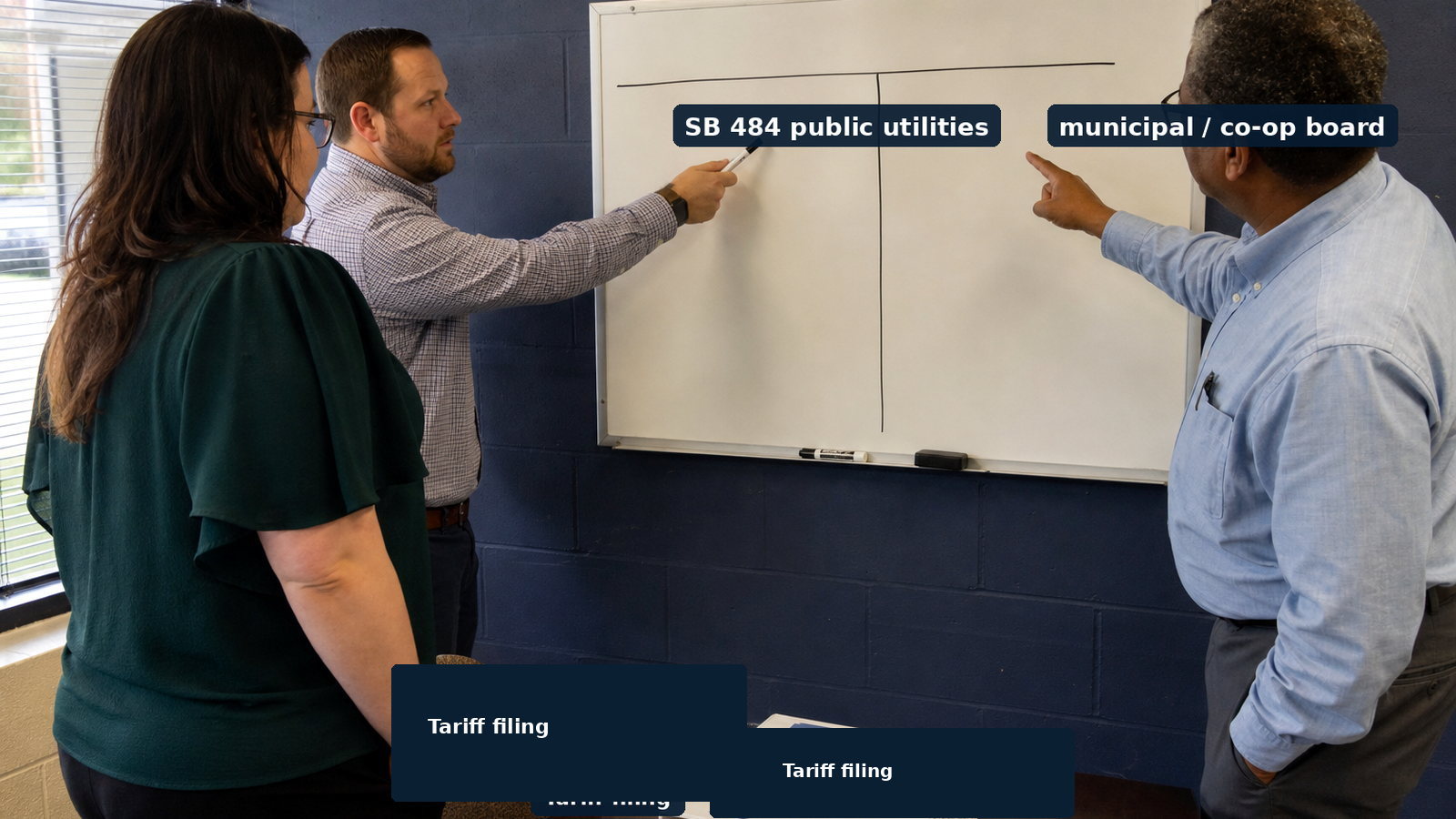
Florida is not waiting on a Texas letter. The 2026 legislature enrolled CS for CS for SB 484, which creates minimum large-load tariff and service requirements for public electric utilities. The enrolled text defines a large-load customer as one with an anticipated monthly peak of 50 megawatts or more at a single location, bars splitting that load to dodge the class, and tells the Florida Public Service Commission to require tariffs that “reasonably ensure that each large load customer bears its own full cost of service and that such cost is not shifted to the general body of ratepayers.”
That is the statute’s language. It is not a guarantee anyone’s bill stays flat, and this is not legal advice on how to apply it.
Central Florida Public Media, publishing a PolitiFact check on 11 August 2026, reported the practical gap. The law binds the four investor-owned utilities the PSC fully regulates: Florida Power & Light, Duke Energy Florida, Tampa Electric, and Florida Public Utilities Company, which together serve about 75 percent of the state’s population. It does not apply to rural cooperatives or municipal utilities such as Jacksonville Electric Authority, Orlando Utilities Commission, and Gainesville Regional Utilities. Those systems are governed by local boards that set their own pricing rules. Public utilities must file compliant tariffs by 1 October 2026.
For a county or city that owns its electric utility, Texas is not a curiosity from another ISO. It is the same control problem with fewer statewide guardrails. The enrolled bill also states that local governments keep comprehensive-planning authority over large-load customers. Counsel should say what that means on a given parcel.
The first test of SB 484 is already at the PSC. On 26 August 2026, WGCU, publishing Florida Trib reporting, described a hearing on Duke Energy Florida’s large-load proposal. Duke’s filing, as that story reported it, includes a 20-year minimum term, minimum monthly bills, and early-termination fees, but does not set specific new rates for large-load customers. Duke’s attorneys said a full large-load rate would come later, after the current rate agreement ends in 2027. Florida’s public counsel, Walt Trierweiler, said the proposal “doesn’t attempt to comply with the most basic provisions” of SB 484. Commissioner Mike La Rosa, in a written order quoted by the Trib, called the petition facially noncompliant.
WGCU also reported that Duke does not currently have large-load data-center customers, and that it is slated to power what could become the state’s first hyperscale facility, in Fort Meade, a project that still faces regulatory hurdles. That is one named project in one outlet’s account, not a Florida queue total or a gigawatt figure.
A statute that “reasonably ensures” cost of service still has to be implemented in tariffs. A municipal or cooperative board that sits outside that statute still has to decide, in public, who pays if the load arrives, and who pays if it does not.
Load, Water, and Tax Are Operating Questions
Abbott’s audit list is a useful checklist even where his letter has no force. Power and on-site generation. Water and cooling. Tax breaks. Ownership. Local impacts. Those are fields a county administrator, clerk, utility director, CIO, and finance officer should fill in before anyone votes an abatement or signs an interconnect.
The enrolled Florida bill treats water as part of the same package: the same 50-megawatt band, a hearing on consumptive-use applications, and reclaimed water when a suitable source is actually available. None of that is a permit opinion. Local operators who treat the packet as a ribbon cutting, and the water and electric files as someone else’s problem, have already chosen scale first.
Tax is the quiet line. If a board cannot see the incentive stack, it cannot price the public side of the deal. AP’s Texas reporting made the same point: Abbott wanted the audit to include the tax breaks a project will receive.
This is AI Operating Control as an infrastructure-and-cost problem, named after the bill, not before it. For a mid-market county or a mid-sized company, AI enablement means naming the load, the vendor, the water, and the cost before the interconnect, not importing a hyperscale process the organization does not staff. A CIO who cannot see which workloads sit on which vendor, and a county that cannot see which megawatts sit on which tariff, are both running an unpriced commitment. The Buildtelligence homepage frames the same control problem: cost, data, workflows, and vendor choice.
What This Piece Does Not Promise
This is not a finding that data centers should be banned, and it is not a finding that they should be waved through. AI compute is a real industrial load. Unmanaged, it shows up on residential and small-commercial bills, on wellfields, and on abatement ledgers. Managed, it is a customer class with a contract, a water plan, and a named owner.
We are not printing Florida project counts, Florida gigawatt totals, or unsourced local rate impacts, and we are not treating Abbott’s letter as a statutory moratorium. How to write a CUP, a tariff, or an incentive agreement is a job for counsel, engineers, and the board that will have to defend the vote.
A pause can be useful and still be thin. A tariff filing can recite “cost of service” and still defer the rate. Process is not the same thing as control.
Buildtelligence is an independent implementer of any AI stack, not an electric-rate witness. The relevant question remains whether leadership can see the cost, the load, and the vendor before either the model or the megawatt scales.
What Should Florida Local Operators Ask Before the Next Interconnect or Abatement?
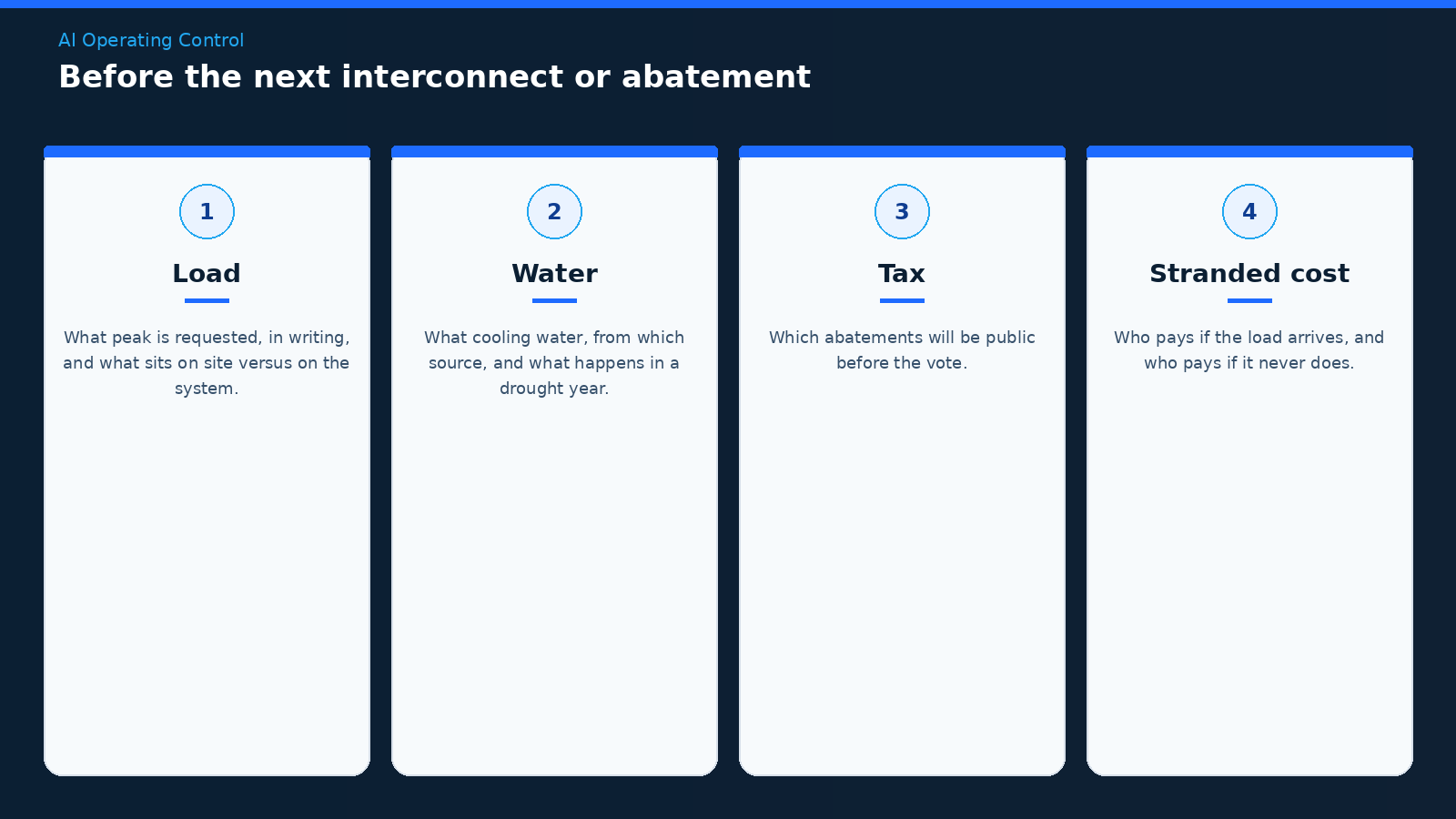
The next useful move is a short packet, not a task force. Who is the owner, including any colocation that would hit the large-load threshold at one site? What is the requested peak, in writing, and what generation sits on site versus on the municipal or investor-owned system? What water is proposed for cooling, from which source, and what happens in a drought year? Which tax abatements or confidentiality requests will be public before the vote?
Who pays for connection, incremental transmission, and incremental generation if the load arrives, and who pays if it does not? Is there a minimum term, a minimum bill, a financial guarantee, and a curtailment right that works in an emergency? Does the applicant sit under SB 484 as a public-utility customer, or under a municipal or cooperative board that has to write those protections itself?
Those questions are the same for a commissioner, a clerk, a municipal utility director, or a company finance lead asked to co-sign a campus.
The first phase of AI adoption was about access. The next phase is about control. Buildtelligence helps companies use AI without losing control of cost, data, workflows, or vendor choice. For a Florida county, the public equivalent is simpler: do not scale the interconnect until the board can answer who pays, how much water, which tax, and what happens if the load never shows.
What, exactly, is on the next application in the folder?