

ThinkFreely
The AI Operating Layer for Practical Implementation
An AI operating layer gives companies a controlled way to manage AI activity across models, workloads, privacy boundaries, workflows, and teams. ThinkFreely is Buildtelligence’s AI Operating Layer, built to help mid-sized companies move from scattered AI experimentation to practical, governable implementation with visibility, direction, routing, privacy-aware control, usage oversight, and workflow support. ThinkFreely is not required for every implementation. Buildtelligence can work inside existing environments when they already provide enough visibility, governance, privacy control, and workflow support.
What is an AI Operating Layer? Do we need ThinkFreely for every engagement?
What ThinkFreely Is
ThinkFreely is the AI Operating Layer that Buildtelligence implements as a ThinkFreely implementation partner. It is the control layer that helps companies manage how AI work moves through the organization, across models, hosts, priorities, privacy rules, workflows, and governance requirements.
It is not another chatbot. It is not a simple model proxy. It is not only a dashboard dressed up as strategy. ThinkFreely is designed to help companies make AI usable, governable, and scalable across real business environments.
Most AI tools focus on a single interface. ThinkFreely focuses on the operating foundation beneath the interface. A company may have people using AI but still lack a consistent way to decide which models should be used, what work should stay local, which requests can go remote, what should happen when a model fails, how privacy rules should be enforced, which workloads should be prioritized, and how important instructions should remain stable over time.

From AI Pressure to AI Traction
Most mid-sized companies do not lack interest in AI. They lack structure. They know AI matters. They see competitors testing it. They hear pressure from leadership, employees, customers, software vendors, and investors. But when it comes time to implement AI inside real workflows, the path becomes much harder.
The practical questions arrive quickly: Which models should be used for which work? Which requests should stay local? Which can safely go to remote providers? Which tasks deserve premium models? How should usage be tracked? What happens when a model or host fails? How do you prevent sensitive data from being routed incorrectly? How do you keep critical instructions from drifting out of context during long-running work?
These are operating questions, not just technology questions. ThinkFreely helps companies answer them inside a managed foundation.
Powered by the RouteFreely Engine
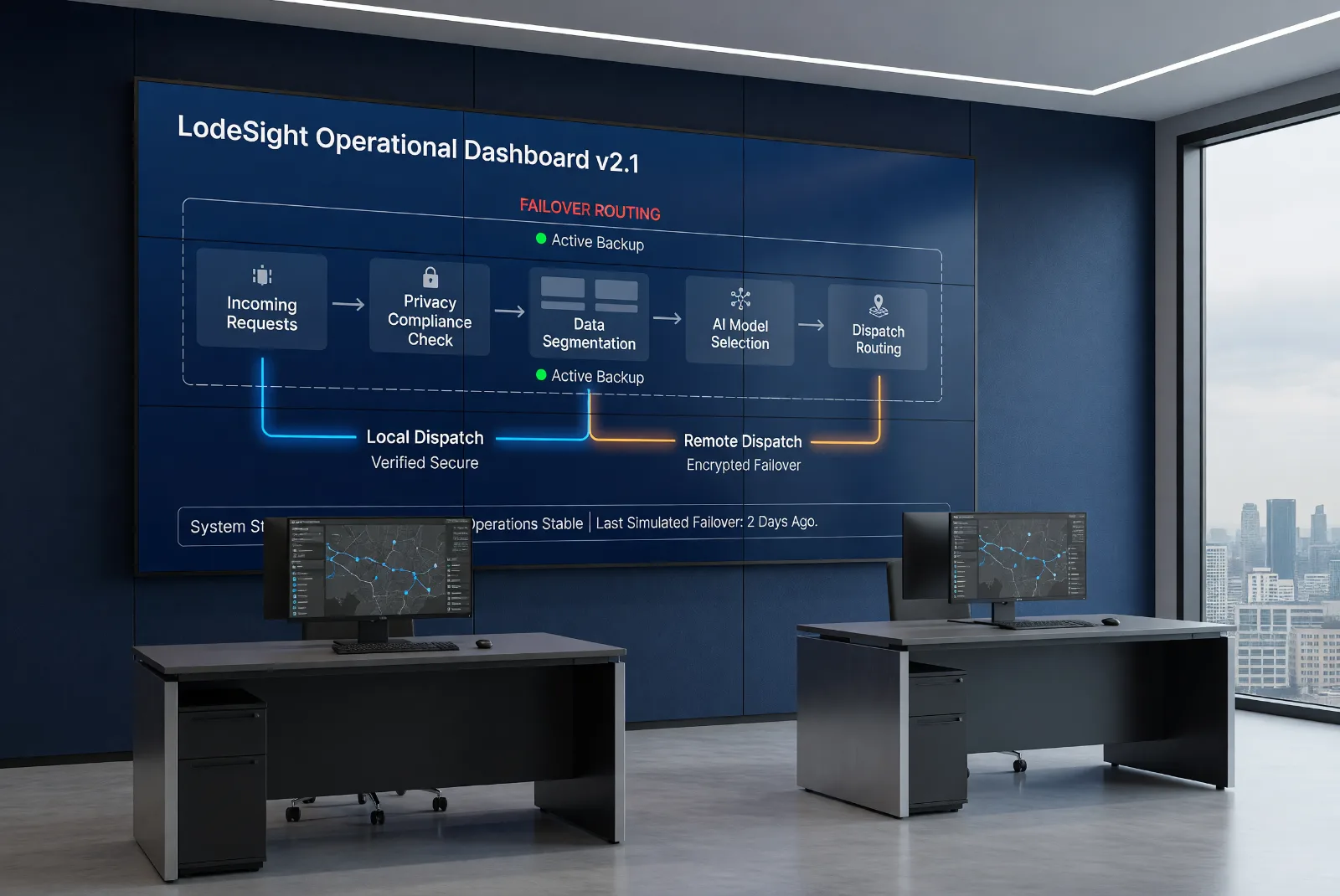
If ThinkFreely is the operating layer, RouteFreely is the decision engine that helps that layer act intelligently. RouteFreely is the routing, queueing, privacy-aware dispatch, and failover subsystem inside the operating layer.
RouteFreely helps avoid treating every AI request the same. A quick internal summary should not compete for the same resources as a sensitive legal review, a high-priority executive workflow, a vision-based document analysis, or a customer-facing automation. Different requests have different needs.
- Capability-aware routing across language, vision, and embedding requests
- Priority-aware queueing with normal, express, and higher-priority paths
- Host and model selection based on availability, capability, capacity, and policy
- Failover and recovery through retry and requeue to compatible alternatives
- Privacy-aware dispatch evaluated before routing. Local-only, remote-allowed, or fail-closed

Strengthened by DriftHold
Routing work correctly is only part of the problem. Once work is underway, the system also needs to preserve the instructions that make the workflow reliable. As AI workflows become longer, more complex, and more operationally important, drift becomes a hidden risk.
Drift can happen when important instructions, constraints, tone requirements, role definitions, safety boundaries, or process rules become diluted or displaced over time. Long-running threads, multi-step workflows, agentic chains, model handoffs, context compression, and tokenization differences can all create conditions where AI gradually stops following the original intent.
DriftHold provides prompt anchoring and instruction-preservation controls inside the ThinkFreely operating layer. It can support anchor-if-missing behavior, restoring critical instructions when they are absent, weakened, or displaced from the active working context. This helps preserve role, tone, constraints, governance requirements, workflow-specific rules, and other important operating instructions throughout longer interactions.
Why an AI Operating Layer Matters
AI tools are easy to start using. AI systems are harder to operate. A tool can answer a prompt. An operating layer helps determine how AI fits into the business.
ThinkFreely gives companies a way to manage AI as an operational capability rather than a collection of individual subscriptions. It supports the practical questions that appear after the first wave of experimentation:
- Who should have access to which AI capabilities?
- Which workloads should be prioritized?
- Which models should be used for different request types?
- How should sensitive data be classified before routing?
- What should happen if a model is unavailable?
- How should teams monitor waiting, running, completed, failed, or cancelled work?
- How can instructions stay consistent across long-running workflows?
- How can leadership see whether AI adoption is producing controlled progress or unmanaged sprawl?
Core Business Benefits
Better Control Over AI Adoption
Move from ad hoc usage to managed implementation. Shared operating foundation for routing, visibility, governance, privacy, and workload control.
Smarter Model Usage
Route work based on capability, availability, priority, privacy rules, and workload needs. Use powerful models where they matter and efficient options where they are sufficient.
Stronger Privacy Posture
Privacy-aware dispatch distinguishes between work that can be handled remotely and work that should remain local. Fail-closed behavior available for stricter environments.
Greater Reliability
Manage host failures, slow APIs, saturated capacity, and workload spikes through queueing, host health awareness, retry, and failover logic.
Operational Visibility
Clearer view of AI activity. Leaders and operators see work in progress, waiting workloads, completed activity, failed requests, host conditions, queue states, and operational history.
Room to Grow
Not limited to one model, workflow, vendor, or department. Designed to support a broader implementation path including knowledge systems, governance, workflow orchestration, and future agentic systems.
When ThinkFreely Is Needed
- AI usage is spread across multiple tools, teams, or models
- Leadership lacks visibility into what is happening
- Governance rules are difficult to enforce
- Sensitive data may require stronger privacy-aware handling
- Teams need more reliable routing across models or systems
- The company needs to prioritize certain AI workloads
- Existing tools do not provide enough operating control
- Early AI workflows are useful but hard to scale
- Long-running workflows need better instruction stability
When ThinkFreely May Not Be Needed Yet
Not every company needs ThinkFreely immediately. Some companies already have strong internal controls, approved AI platforms, clear governance, reliable workflows, and enough visibility for their current stage of adoption. Buildtelligence can work inside the existing environment when functioning systems are in place.
ThinkFreely is most valuable when the current environment cannot support the level of visibility, direction, control, routing, privacy awareness, workflow governance, reliability, or instruction stability the company needs. The goal is to make AI implementation work, not to force a platform decision.
Frequently Asked Questions
What is an AI operating layer?
An AI operating layer is the structure that helps manage AI activity across models, workloads, privacy boundaries, governance requirements, workflows, and usage patterns. It gives companies more visibility, direction, and control as AI adoption grows.
What is ThinkFreely?
ThinkFreely is the AI Operating Layer that Buildtelligence implements as a ThinkFreely implementation partner. It helps companies manage AI activity through routing, queueing, privacy-aware handling, usage visibility, workflow control, failover, prompt anchoring, and governance support.
What is the RouteFreely Engine?
The RouteFreely Engine is the routing, queueing, privacy-aware dispatch, and failover subsystem inside ThinkFreely. It helps determine where AI work should go, what capabilities it requires, how it should be prioritized, and how it should recover when something goes wrong.
How is RouteFreely different from ThinkFreely?
ThinkFreely is the AI Operating Layer. RouteFreely is the engine inside ThinkFreely that handles routing, queueing, privacy-aware dispatch, failover, and workload decisions.
What is DriftHold?
DriftHold is the instruction-stability layer inside ThinkFreely. It helps preserve important instructions, constraints, role definitions, tone requirements, privacy rules, and workflow expectations during longer or more complex AI interactions.
Is DriftHold the same as prompt engineering?
No. Prompt engineering helps define instructions. DriftHold helps preserve important instructions over time inside longer or more complex workflows where context, model changes, or workflow branching can weaken the original instruction set.
Can ThinkFreely help reduce AI tool sprawl?
Yes. ThinkFreely can help companies reduce unmanaged AI sprawl by creating a shared operating layer for routing, visibility, usage oversight, privacy-aware handling, and governance support.
Is ThinkFreely required for AI implementation?
No. Buildtelligence can work inside existing environments when they are strong enough. ThinkFreely is highly recommended when the company lacks the operating structure needed to support repeatable, governed, and scalable AI adoption.
Is ThinkFreely a chatbot?
No. ThinkFreely is not primarily a chatbot. It is an operating layer that helps manage the systems, workflows, routing, privacy controls, queues, usage history, prompt anchoring, and governance surrounding AI usage.
How is ThinkFreely different from a model gateway?
A model gateway generally focuses on routing requests to models. ThinkFreely includes routing, but its broader role is to support implementation through queueing, privacy-aware dispatch, workflow visibility, governance alignment, diagnostics, failover, and instruction stability.
When should a company consider ThinkFreely?
A company should consider ThinkFreely when AI usage is growing, tools are fragmented, privacy concerns are increasing, leadership lacks visibility, current systems are not strong enough to support governed adoption, or long-running workflows need greater instruction stability.

Build AI on an Operating Foundation You Can Govern
AI adoption becomes harder to manage when it grows through disconnected tools, informal workflows, and limited visibility. ThinkFreely gives companies an AI Operating Layer that can support practical implementation with more direction, control, routing, reliability, privacy awareness, and governance. Powered by RouteFreely and strengthened by DriftHold.